AntsJuly 13, 20267 min read
Carpenter Ants in Florida: How to Identify Them and What to Do
Carpenter ants tunnel through wood to nest and can damage your Florida home. Learn how to identify them, spot the signs, and get rid of them for good.
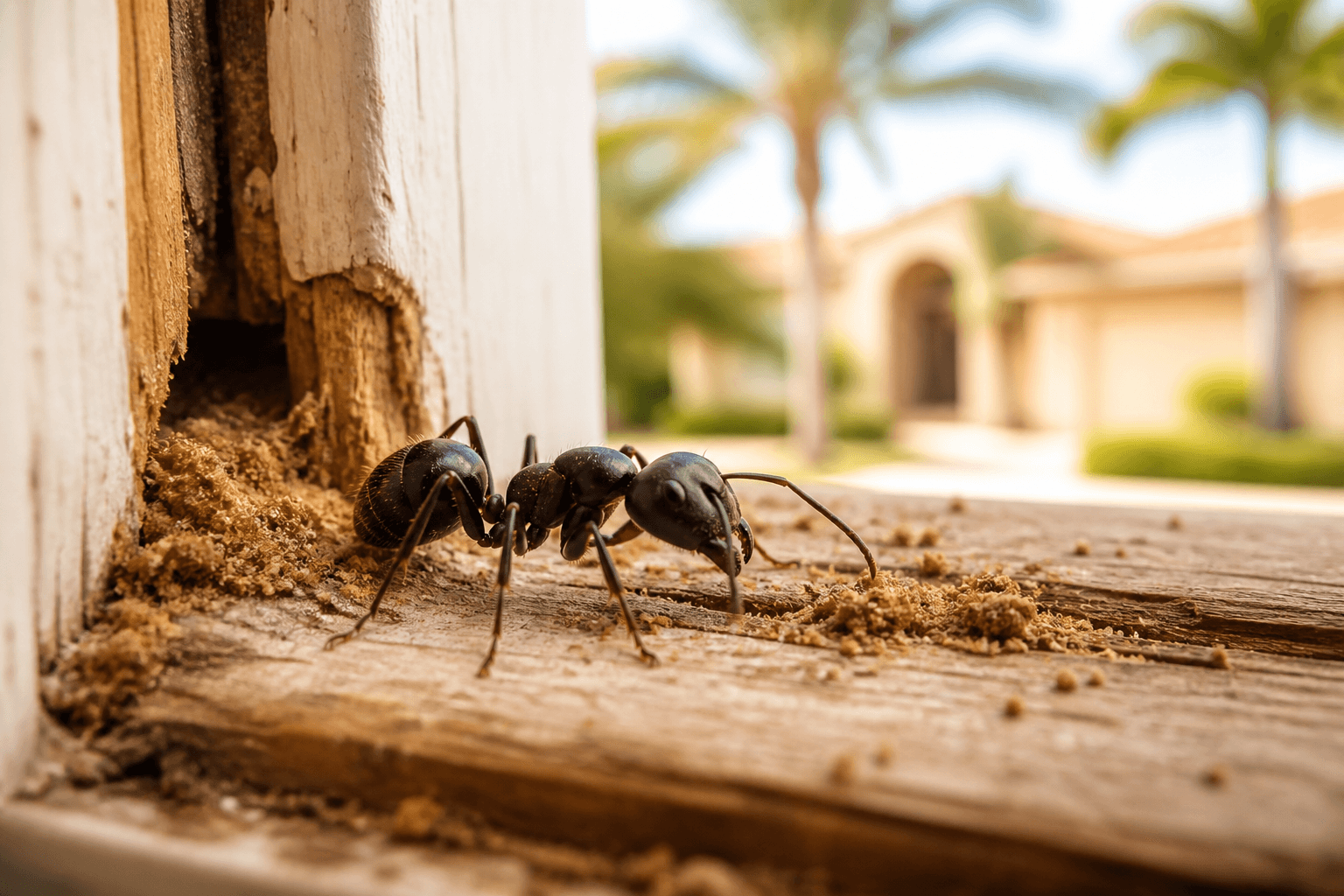
Carpenter ants are large (¼–½ inch) black or dark ants that tunnel through wood to build nests — they don't eat it. In Florida homes they target damp or damaged wood, leaving smooth galleries and sawdust-like frass. To get rid of them, you have to find and treat the nest and fix the moisture that attracted them; surface sprays won't solve it.
Here's how to identify carpenter ants and take care of them before they weaken your home.
How to identify carpenter ants
- Size: among the largest ants you'll see indoors, ¼–½ inch.
- Color: usually black, sometimes dark red-and-black.
- Body: pinched waist and bent (elbowed) antennae.
- Swarmers: winged reproductives with front wings longer than the back pair.
Because their swarmers resemble termite swarmers, they're often confused — but the treatment is completely different. See carpenter ants vs termites to be sure which you have.
Signs of carpenter ants in your home
| Sign | What to look for |
|---|---|
| Frass | Sawdust-like shavings mixed with insect parts below wood |
| Rustling sounds | Faint noises inside walls or wood from active nests |
| Smooth galleries | Clean, sanded-looking tunnels (not mud-packed) |
| Large ants indoors | Especially at night; trails toward the kitchen |
| Winged swarmers | Inside the home, signaling a mature nest nearby |
Why they're a problem in Florida
Florida's humidity creates the moist, softened wood carpenter ants love. They often start in water-damaged areas — around leaky roofs, windows, decks, and plumbing — then expand galleries over time, weakening the wood. Nests may be in the home ("parent" nest) or outdoors in trees and stumps with "satellite" nests inside.
How to get rid of carpenter ants
- Find the nest. Follow trails (especially at night), listen for activity, and check moisture-damaged wood. This is the hardest — and most important — step.
- Treat the nest directly with a labeled insecticide dust or foam, or use ant bait that workers carry back to the colony.
- Fix the moisture problem. Repair leaks, improve ventilation, and replace water-damaged wood — otherwise they (or new colonies) return.
- Remove access. Trim branches touching the house and keep firewood/mulch away from the foundation.
Because carpenter ant nests are frequently hidden, DIY often kills foragers while the colony survives. If large ants keep appearing or you can't find the nest, call a professional — our residential pest control in Orlando locates and eliminates the colony.
Frequently Asked Questions
Do carpenter ants eat wood like termites?
No. Carpenter ants tunnel through wood to nest but don't eat it — they feed on proteins and sugars. Termites actually consume wood, which is why the two need different treatments.
How much damage do carpenter ants cause?
Damage is slower than termites but still significant over time, especially in moisture-weakened structural wood. Established colonies can hollow out beams and framing if left untreated.
How do I find a carpenter ant nest?
Follow ant trails at night when they're most active, listen for faint rustling in walls, and inspect damp or water-damaged wood. Frass piles often sit directly below a nest entrance.
Will killing the ants I see solve the problem?
No. Those are foragers — the nest and queen remain hidden. You must treat the nest directly and fix the moisture source, or the colony rebuilds.
Seeing big black ants indoors? Panther Pest Control finds the nest, eliminates the colony, and helps stop it from returning. Get a free quote today.