TermitesJuly 25, 20267 min read
Carpenter Ants vs Termites: How to Tell the Difference (and Why It Matters)
Carpenter ants and termites both damage wood but need different treatment. Learn to tell them apart by body, wings, and frass — and what to do next.
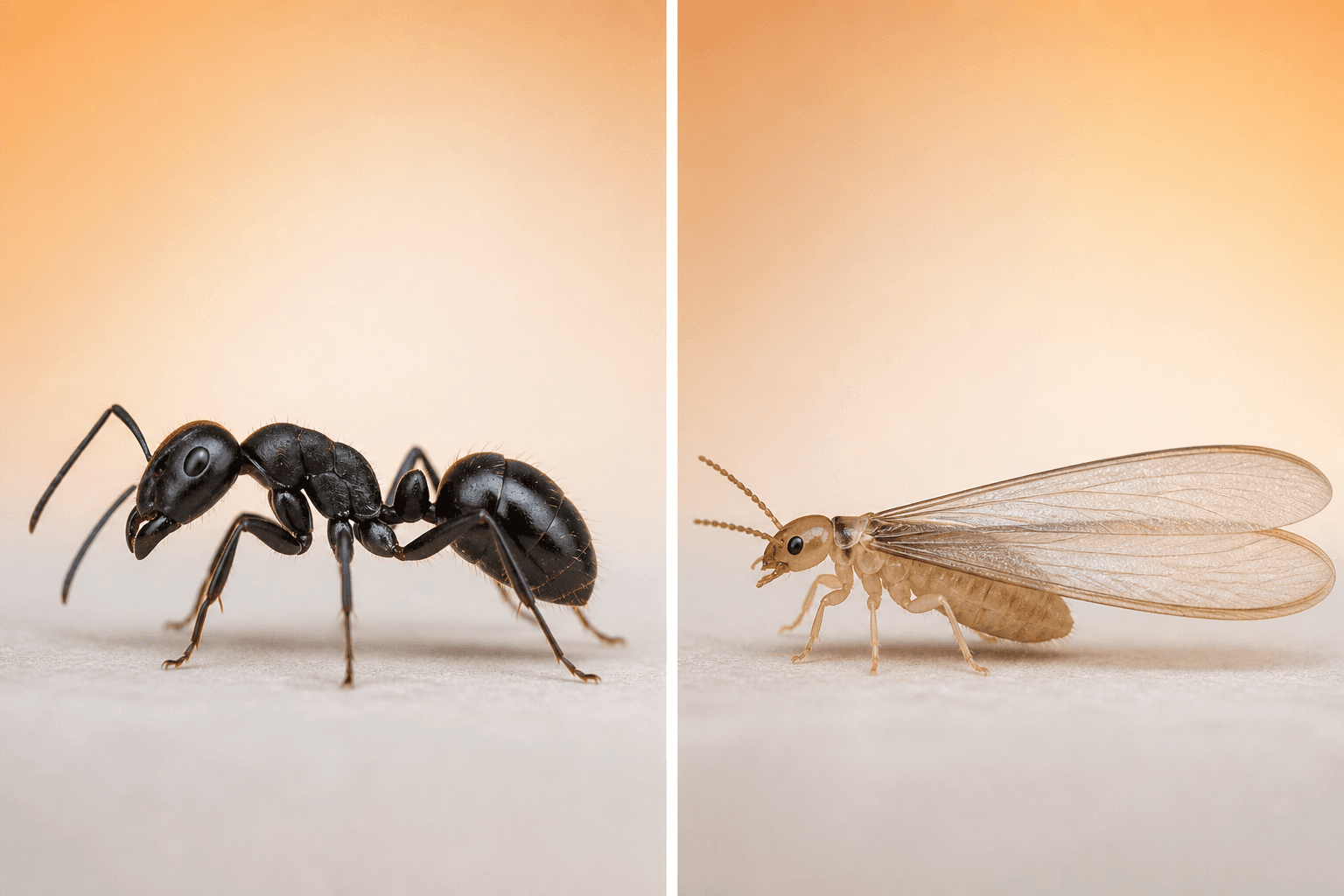
The fastest way to tell carpenter ants from termites: look at the waist, antennae, and wings. Carpenter ants have a pinched waist, bent (elbowed) antennae, and two different-sized wing pairs. Termites have a straight, broad waist, straight antennae, and four equal-length wings. Getting this right matters because the two require completely different treatments.
Both damage wood, and their winged swarmers look alike at a glance — but confusing them can cost you.
Side-by-side: carpenter ants vs termites
| Feature | Carpenter ant | Termite |
|---|---|---|
| Waist | Narrow, pinched | Broad, straight |
| Antennae | Bent / elbowed | Straight, beaded |
| Wings | Front pair longer than back | All four equal length |
| Color | Usually dark/black | Pale, translucent, or light brown |
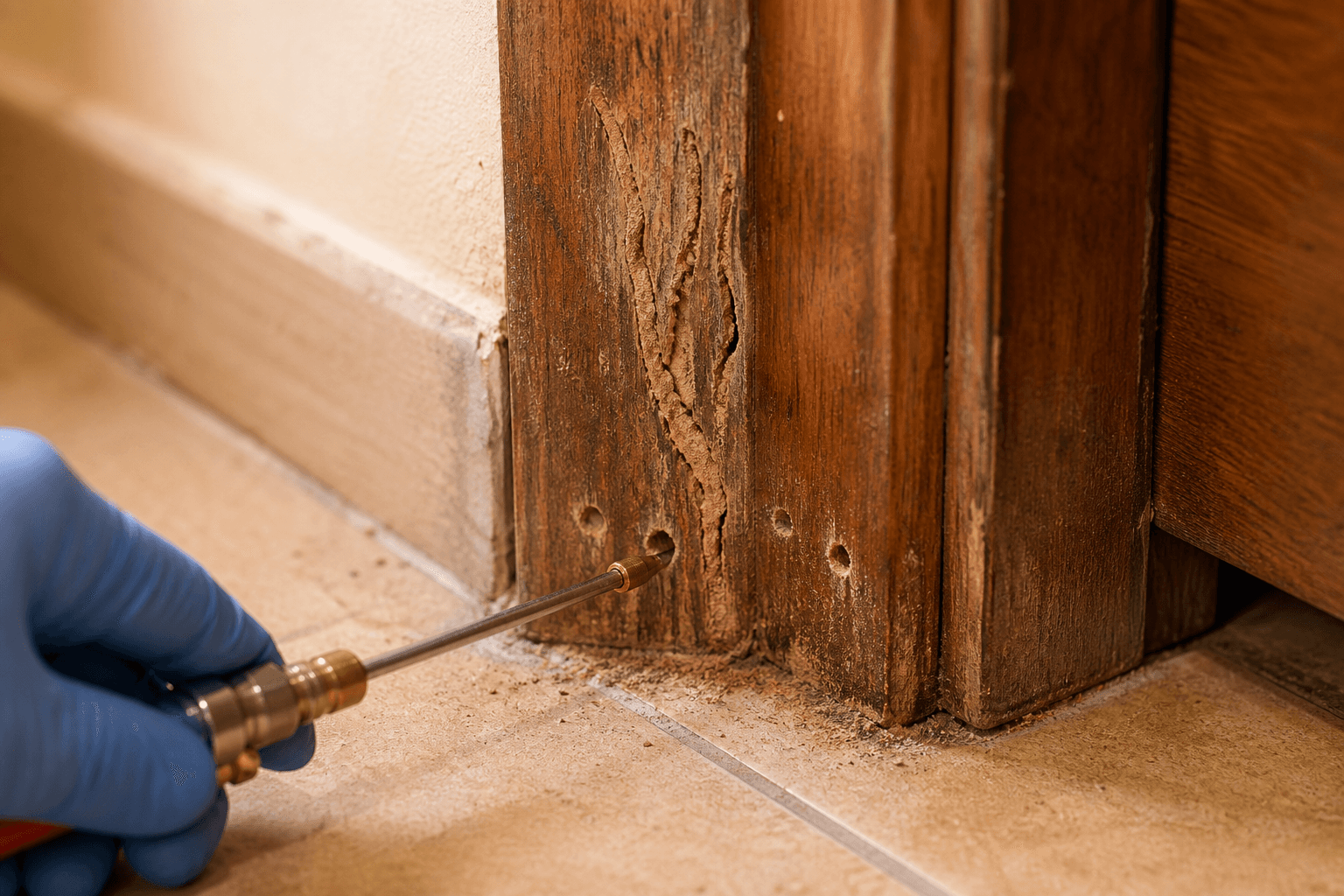
| Wood damage | Smooth, clean galleries | Rough, mud-packed galleries |
| Debris | Frass = sawdust + insect parts | Frass = wood-colored pellets |
How they damage wood differently
This distinction is key:
- Carpenter ants don't eat wood — they tunnel through it to nest, preferring damp or damaged wood. Their galleries are smooth and clean, and they push out frass that looks like sawdust mixed with dead insect parts.
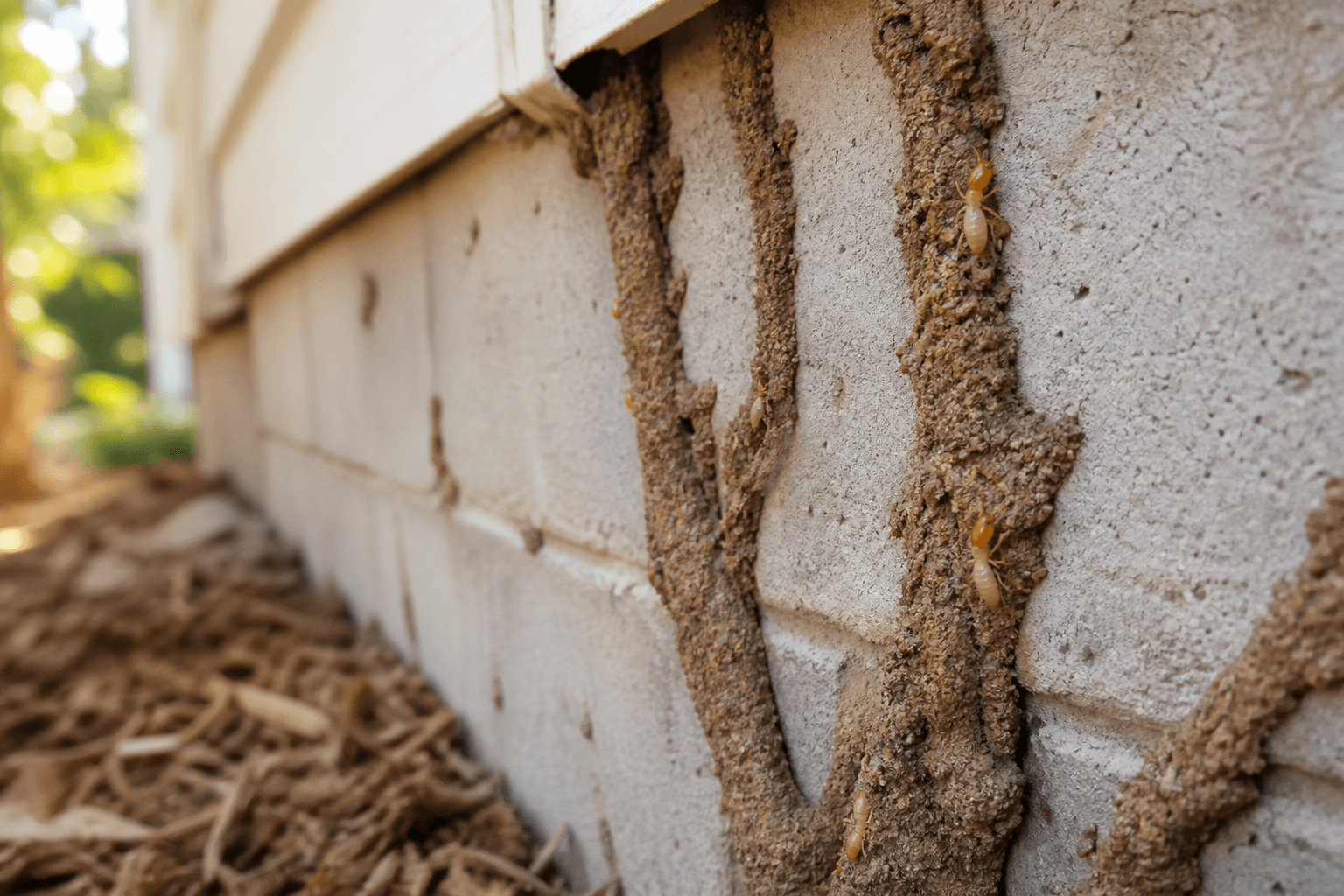
- Termites eat the wood (cellulose) for food. Their galleries are rough and often packed with mud/soil, and subterranean termites build mud tubes.
The swarmer confusion
Both send out winged reproductives ("swarmers") in warm, humid weather, and that's when homeowners most often mix them up. Check three things:
- Antennae — bent = ant, straight = termite.
- Waist — pinched = ant, no waist = termite.
- Wings — unequal = ant, all equal length = termite.
Piles of equal-length discarded wings near windows point to termites. Pale insects that look like "white ants" are almost always termites — see what white ants look like.
Why it matters: treatment is completely different
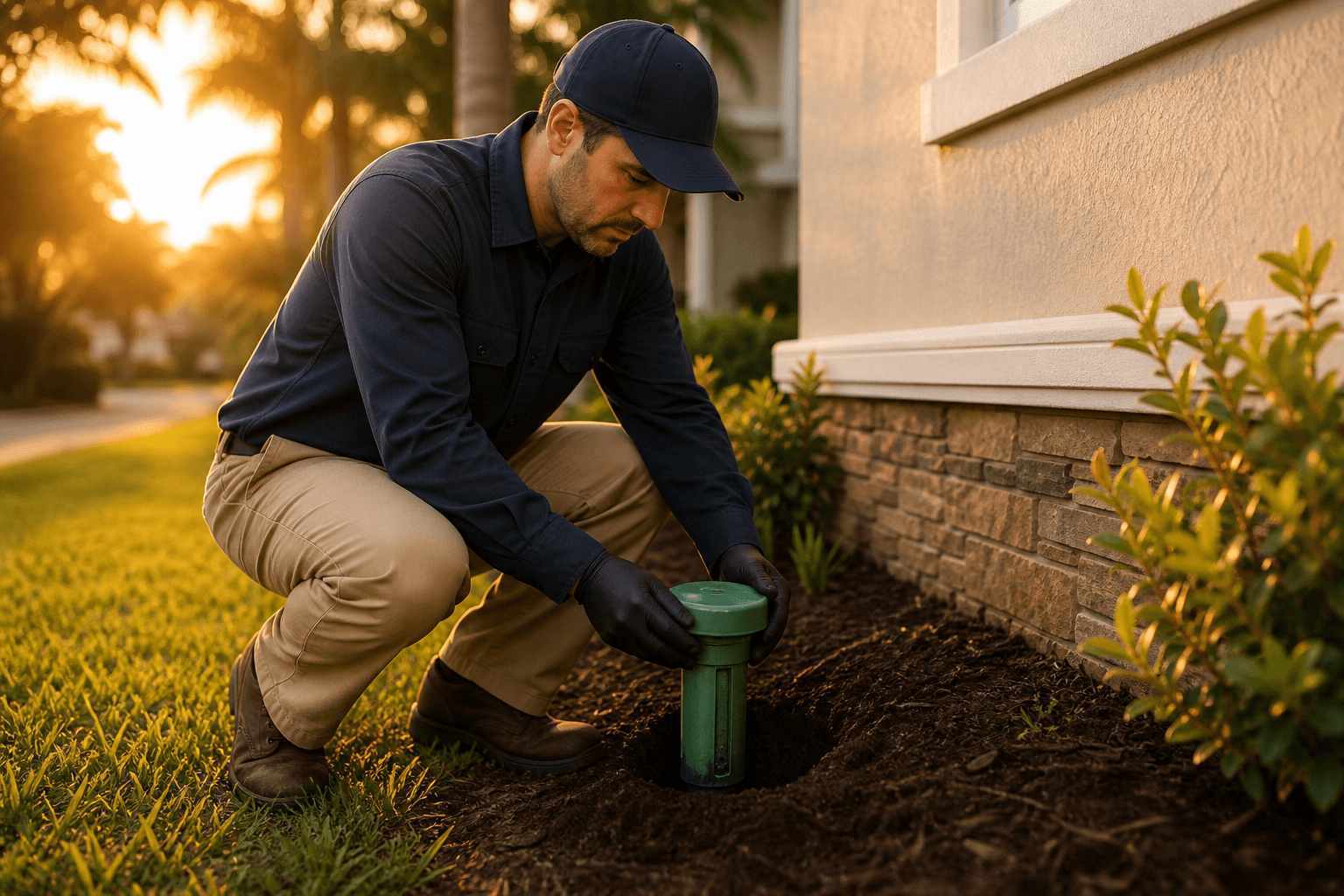
- Termites require colony elimination — a bait system (we're Certified Sentricon specialists) or a liquid soil barrier. Ant sprays do nothing to a termite colony.
- Carpenter ants require locating and treating the nest (often in moisture-damaged wood) and fixing the underlying moisture problem. Termite treatments won't target them correctly.
Misidentifying one as the other wastes money and lets real damage continue. When in doubt, get a professional ID. Learn more in our guides to carpenter ants in Florida and how to get rid of termites.
Frequently Asked Questions
How can I quickly tell a termite from a carpenter ant?
Check the waist and antennae: carpenter ants have a pinched waist and bent antennae, while termites have a straight body and straight antennae. Termite swarmers also have four equal-length wings.
Which is worse, carpenter ants or termites?
Termites generally cause faster, more severe structural damage because they eat the wood itself. Carpenter ants damage wood by nesting in it, which is slower but still serious if left unaddressed.
Do carpenter ants leave frass like termites?
Both leave frass, but it looks different. Carpenter ant frass resembles sawdust mixed with insect body parts; termite frass (from drywood termites) looks like uniform, wood-colored pellets.
Can the same treatment handle both?
No. Termites need colony elimination via bait or a soil barrier, while carpenter ants require nest treatment and moisture correction. Correct identification determines the right approach.
Not sure what you're dealing with? Panther Pest Control will identify the insect and recommend the right treatment. Get a free quote or call today.