TermitesJuly 28, 20268 min read
Signs Of Termites: 2026 Homeowner Guide To Early Detection
Learn the early signs of termites — mud tubes, frass, swarmers, and hollow wood — so you can catch an infestation before it damages your Florida home.
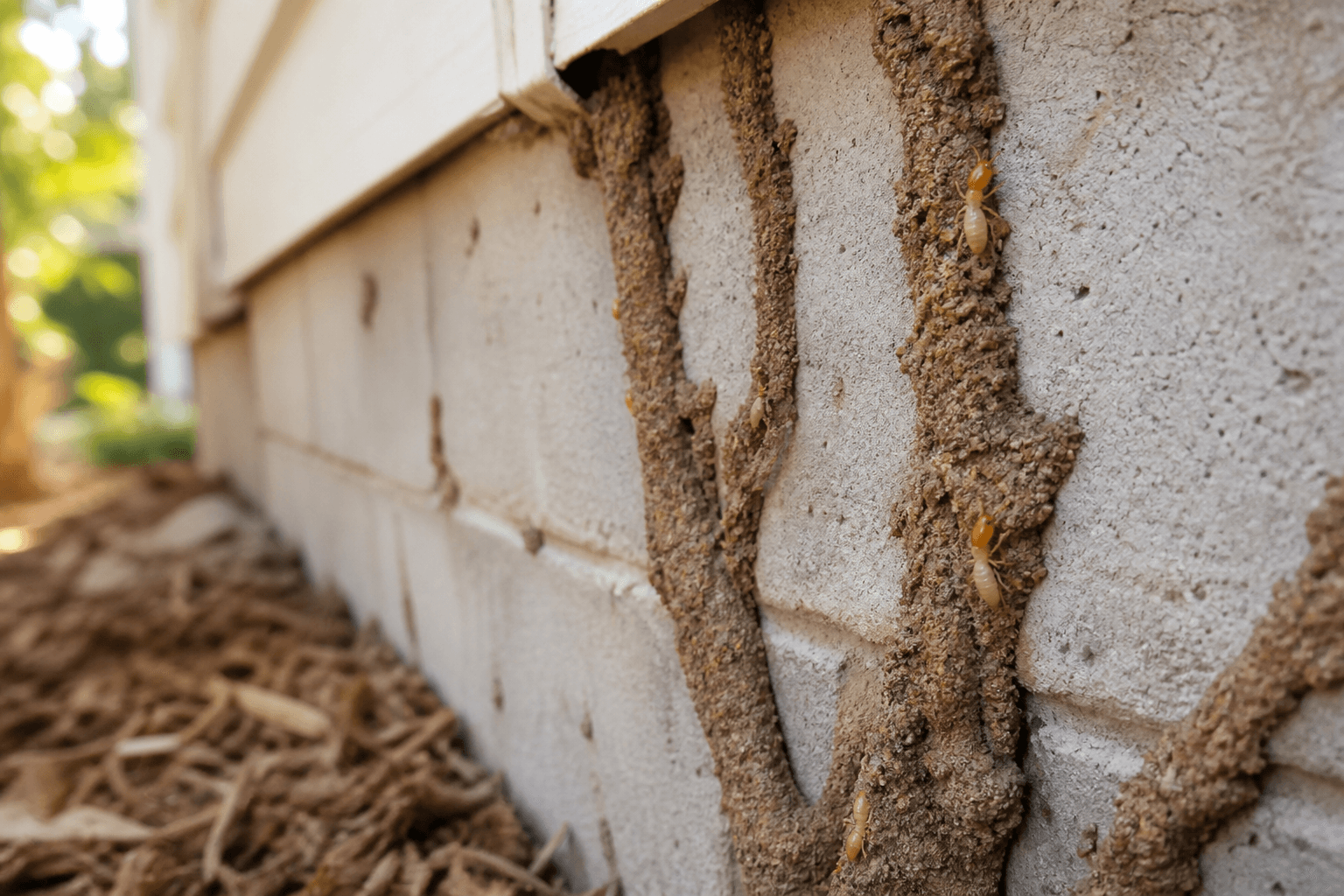
The earliest signs of termites are mud tubes on foundations and walls, frass (tiny wood-colored droppings), discarded wings near windows after a swarm, and wood that sounds hollow when tapped. Catching any one of these early can save a Central Florida home thousands in structural repairs.
Termites are quiet and hidden, so knowing what to look for is your best defense. Here's the 2026 homeowner's guide to spotting them early.
The key signs of termites
| Sign | What it looks like | Which termite |
|---|---|---|
| Mud tubes | Pencil-width dirt tunnels on foundation/walls | Subterranean |
| Frass | Small piles of wood-colored pellets | Drywood |
| Discarded wings | Equal-length wings near windows/doors | Both (after swarm) |
| Swarmers | Winged insects emerging indoors | Both |
| Hollow wood | Wood sounds papery/hollow when tapped | Both |
| Blistered/sagging | Bubbling paint, buckling floors, sticking doors | Both |
1. Mud tubes (subterranean termites)
Subterranean termites — the most common threat in Florida — build pencil-width tunnels of mud to travel from the soil to your home while staying protected. Look along the foundation, in the garage, and in crawlspaces. Intact, active tubes are a clear sign of a live infestation.
2. Frass (drywood termites)
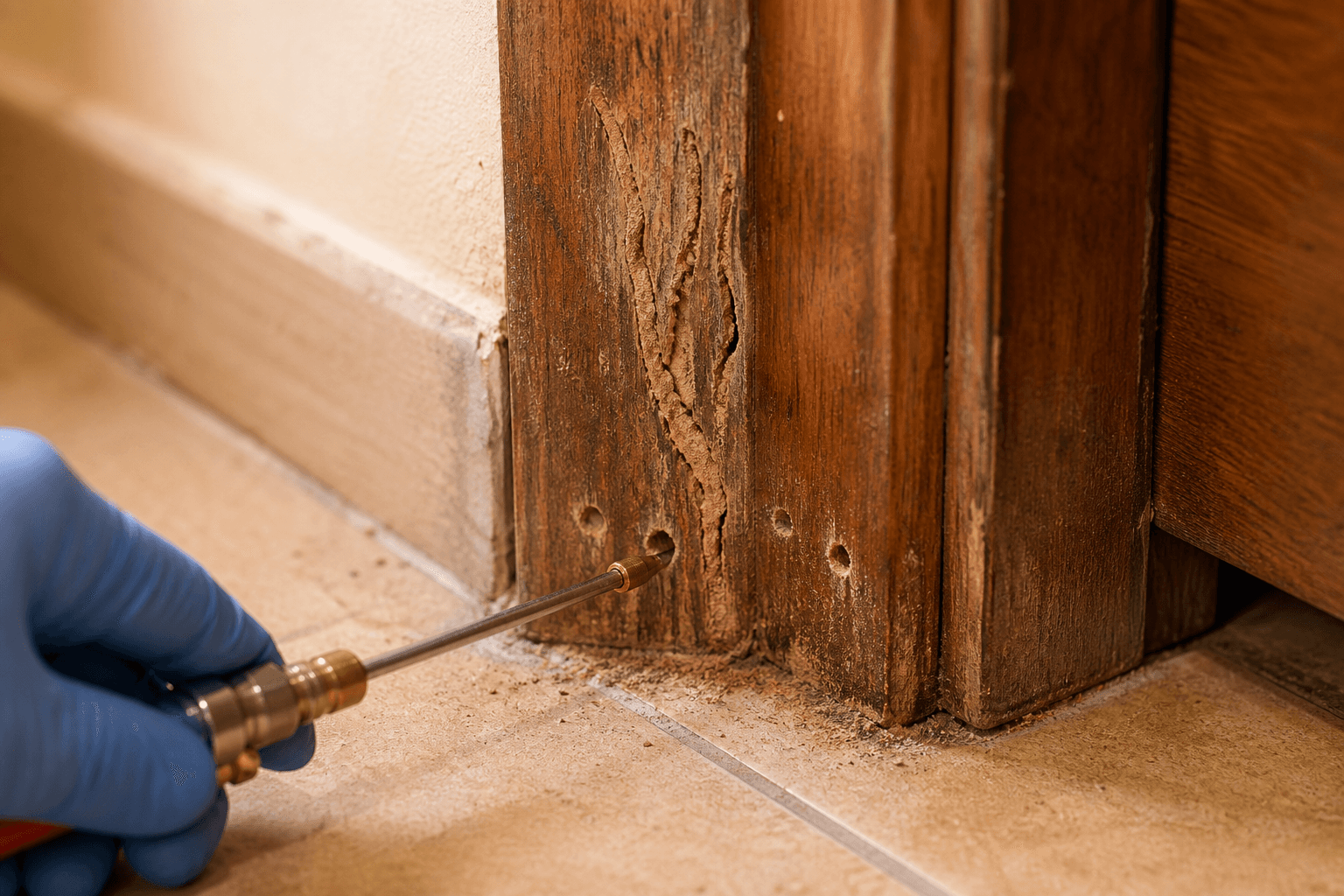
Drywood termites push their droppings out of the wood, leaving small piles of gritty, wood-colored pellets that look like sawdust or coffee grounds — often on windowsills, floors, or shelves beneath infested wood.
3. Swarmers and discarded wings
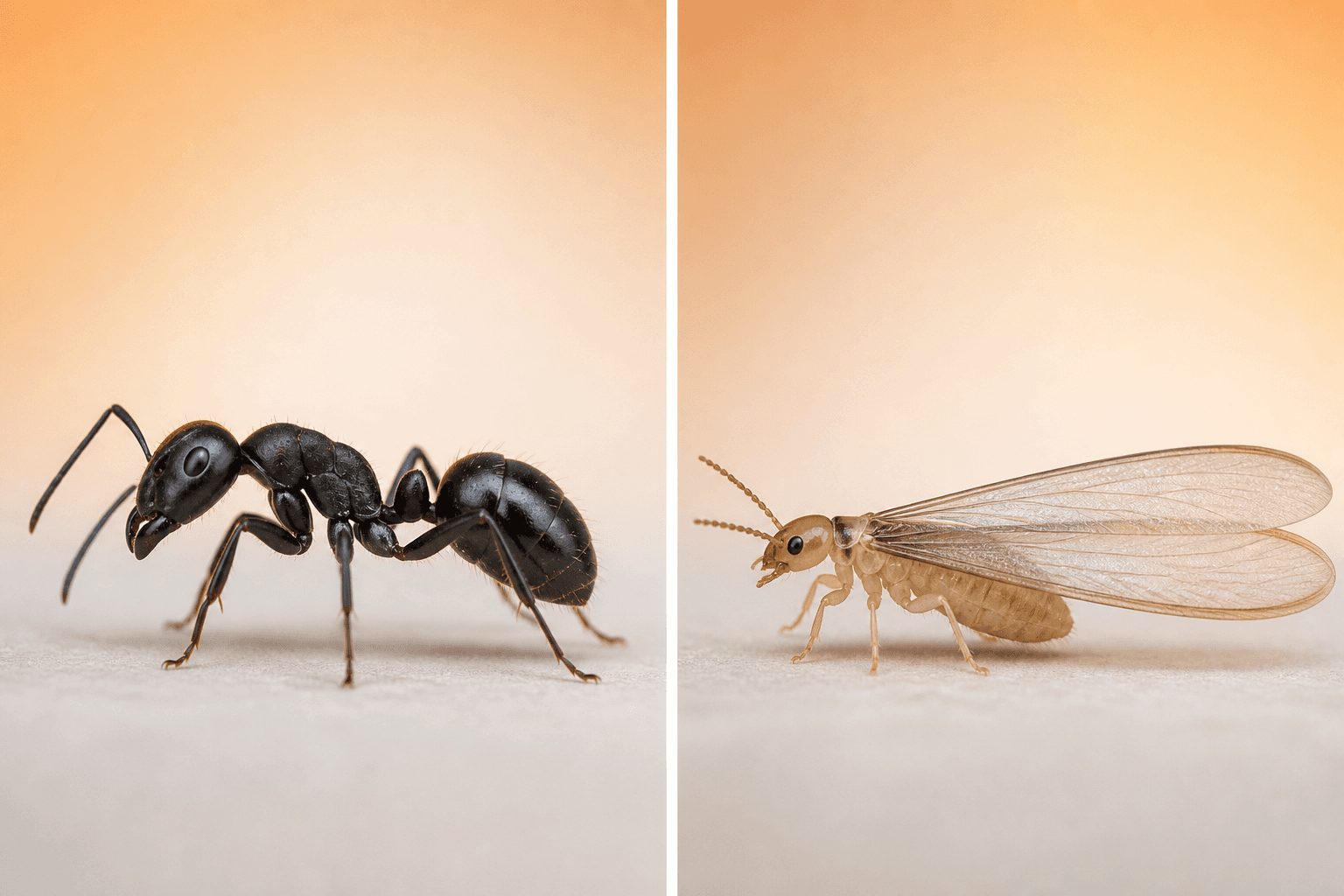
In spring and after rain, reproductive termites (swarmers) fly off to start new colonies, then shed their wings. Piles of equal-length, translucent wings near windows and doors — or the swarmers themselves indoors — signal a mature colony nearby. Don't confuse them with flying ants; see carpenter ants vs termites.
4. Hollow or damaged wood
Termites eat wood from the inside out, so the surface can look fine while the inside is hollowed. Tap suspect wood — trim, door frames, baseboards — and listen for a papery, hollow sound. Also watch for buckling floors, sticking doors/windows, and blistered paint.
What to do if you see the signs
- Don't disturb the area — knocking down mud tubes or spraying can scatter termites and mask the extent.
- Get a professional inspection to confirm the species and map the activity.
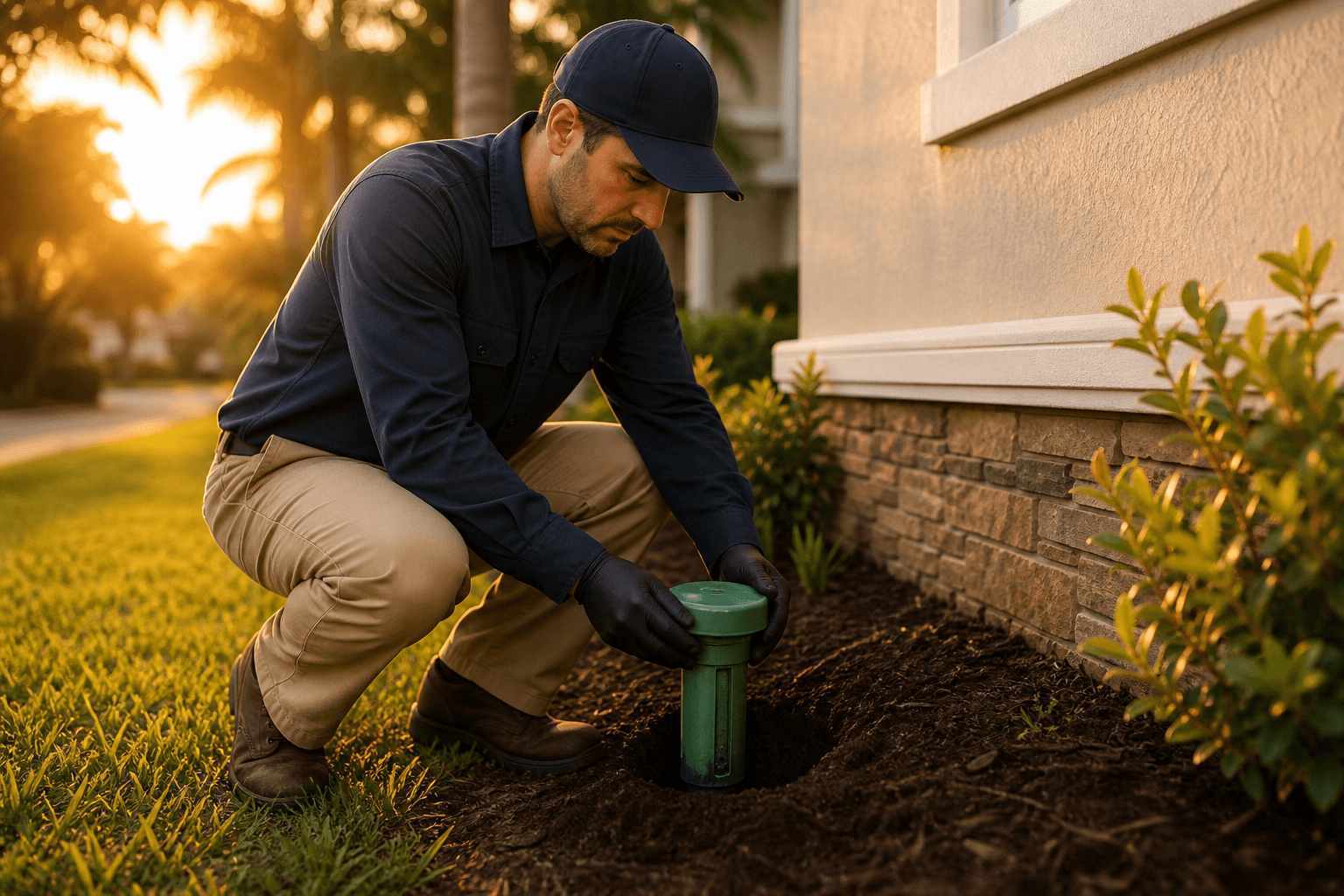
- Choose the right treatment — a whole-colony bait system (we're Certified Sentricon specialists) or a liquid barrier, not a quick spot treatment unless it's confirmed isolated.
Our complete guide covers how to get rid of termites step by step.
Frequently Asked Questions
What are the first signs of termites?
The earliest signs are usually mud tubes on the foundation (subterranean termites) or small piles of frass beneath wood (drywood termites), followed by discarded wings after a swarm.
What does termite frass look like?
Frass looks like tiny, wood-colored pellets or gritty sawdust — often in small piles on windowsills or floors below infested wood. It's a hallmark of drywood termites.
Are flying termites a bad sign?
Yes. Swarmers indoors or piles of discarded wings mean a mature colony is nearby and producing reproductives. Have the home inspected promptly.
How quickly do termites cause damage in Florida?
Florida's climate lets colonies stay active year-round, so damage accumulates continuously. Early detection is critical — a small problem can become structural in a matter of months to a few years.
See any of these signs? Panther Pest Control offers free termite inspections across Orlando and Central Florida. Get a free quote or call today.