AntsJuly 16, 20267 min read
Fire Ants in Florida: What You Need to Know (and How to Get Rid of Them)
Fire ants deliver painful stings and build fast-spreading mounds in Florida lawns. Learn to identify them, treat mounds safely, and prevent them.
To get rid of fire ants, use the two-step method: broadcast a slow-acting fire ant bait over the whole yard so foragers carry it back to the queen, then treat any remaining mounds directly. Killing a mound on the surface alone doesn't work — if the queen survives, the colony rebuilds or simply relocates.
Red imported fire ants are aggressive, sting in swarms, and thrive across Central Florida. Here's what to know and how to beat them.
How to identify fire ants
- Small reddish-brown ants, roughly 1/8–1/4 inch, in varied sizes within one colony.
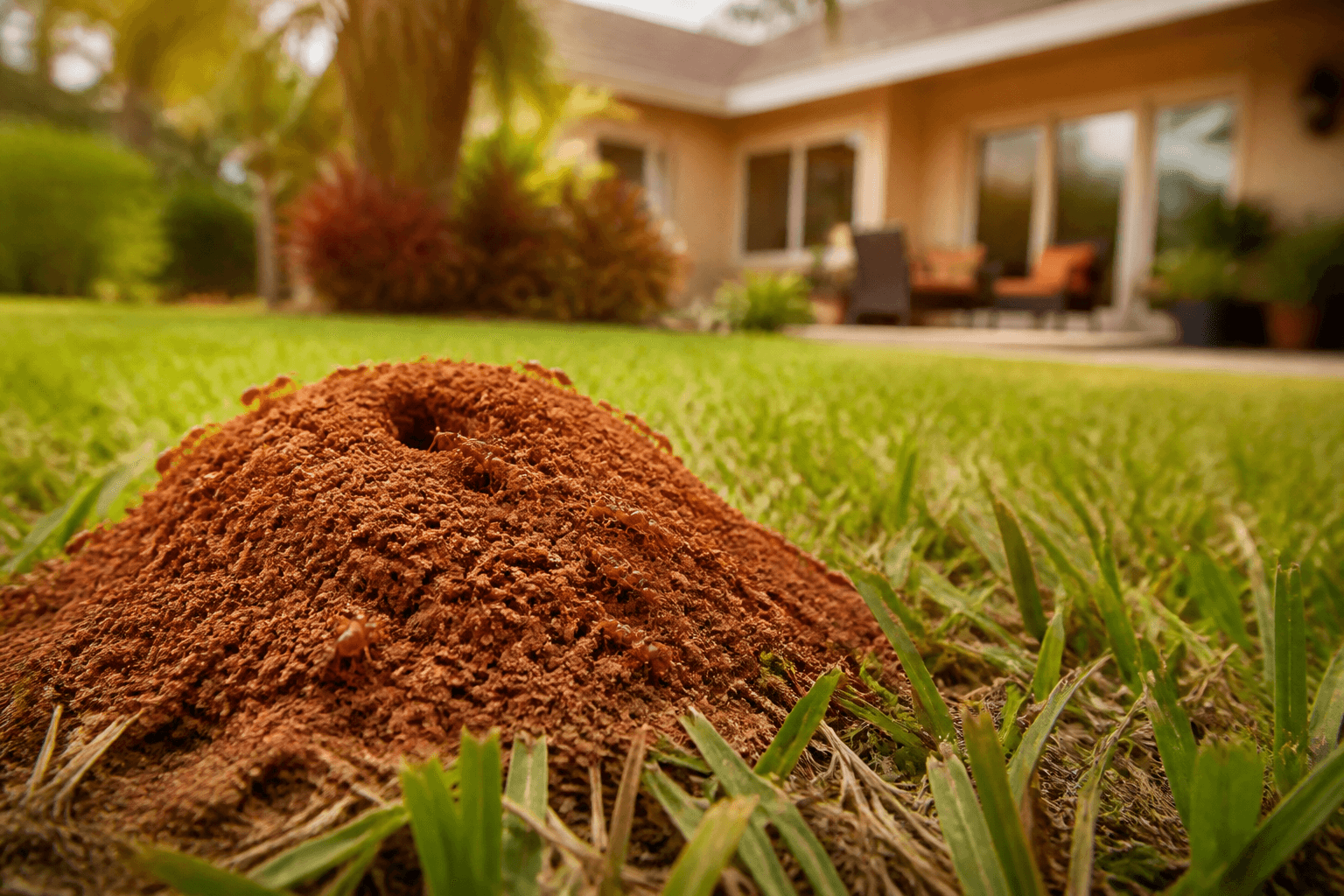
- Dome-shaped dirt mounds with no visible central opening, often in sunny, open lawn areas — appearing quickly after rain.
- Aggressive swarming when the mound is disturbed: they boil out and sting repeatedly.
Fire ant stings
Fire ants grip with their jaws and sting, injecting venom that causes a burning sensation followed by an itchy white pustule within a day or two. Most people get red, itchy welts; some are allergic and can have a severe reaction. Seek medical care immediately for signs of an allergic reaction (difficulty breathing, swelling, dizziness).
How to get rid of fire ants (the two-step method)
| Step | What to do | Why |
|---|---|---|
| 1. Broadcast bait | Spread fire-ant bait across the whole yard | Foragers carry it to the queen — kills the colony |
| 2. Treat mounds | Apply mound treatment to any survivors | Knocks out stubborn or missed colonies |
- Broadcast a slow-acting bait over the entire lawn, following label rates. Apply when ants are actively foraging (mild, dry weather) and don't water it in.
- Wait a few days, then treat individual mounds that remain with a mound drench or dust. Avoid kicking or flooding mounds — that just relocates the queen.
Reapplying bait a few times a year keeps new colonies from establishing.
Prevention tips for Florida yards
- Keep the lawn healthy and mowed — reduces prime mounding spots.
- Remove debris and food sources, and manage aphids/honeydew that ants feed on.
- Reduce standing water and fix drainage; fire ants love moist soil.
- Inspect regularly, especially after rain, so you catch new mounds early.
When to call a professional
Fire ants are persistent, and DIY often clears one area only for colonies to reappear. If mounds keep returning, cover a large area, or are near where kids and pets play, professional lawn treatment gives longer-lasting control. Our residential pest control in Orlando includes ant control programs, and you can compare Florida's other common ant in our carpenter ants guide.
Frequently Asked Questions
What is the best way to kill fire ants?
The two-step method is most effective: broadcast a slow-acting bait across the yard so foragers deliver it to the queen, then treat any remaining mounds individually a few days later.
Why do fire ant mounds keep coming back?
If the queen survives, the colony rebuilds or relocates — which is why surface-only mound treatment fails. Baiting reaches the queen, and colonies can also move in from neighboring yards.
Are fire ant stings dangerous?
Most stings cause painful welts and itchy pustules, but some people are allergic and can have a severe reaction. Seek emergency care for breathing difficulty, swelling, or dizziness after stings.
When should I treat for fire ants?
Treat when ants are actively foraging in mild, dry weather, and reapply bait a few times per year. Florida's warm climate keeps fire ants active nearly year-round.
Fire ants taking over your yard? Panther Pest Control treats the whole property to eliminate colonies and keep them out. Get a free quote or call today.