RodentsAugust 24, 20267 min read
How To Get Rid Of Roof Rats: Pest Control for Rats In Your Roof
Roof rats invade Central Florida attics through the roofline. Learn the signs, how to get rid of them, and how to seal your Orlando home for good.
To get rid of roof rats, you need to do three things in order: trap the rats already inside, seal every entry point along the roofline, and remove the food and cover drawing them in. Skipping the sealing step is why most DIY efforts fail — new rats simply follow the same trails back in.
Roof rats (Rattus rattus) thrive in Central Florida. Our warm winters, mature tree canopy, and tile-and-soffit rooflines give them everything they need to nest high and out of sight. Here's how to reclaim your attic — and keep it that way.
What are roof rats?
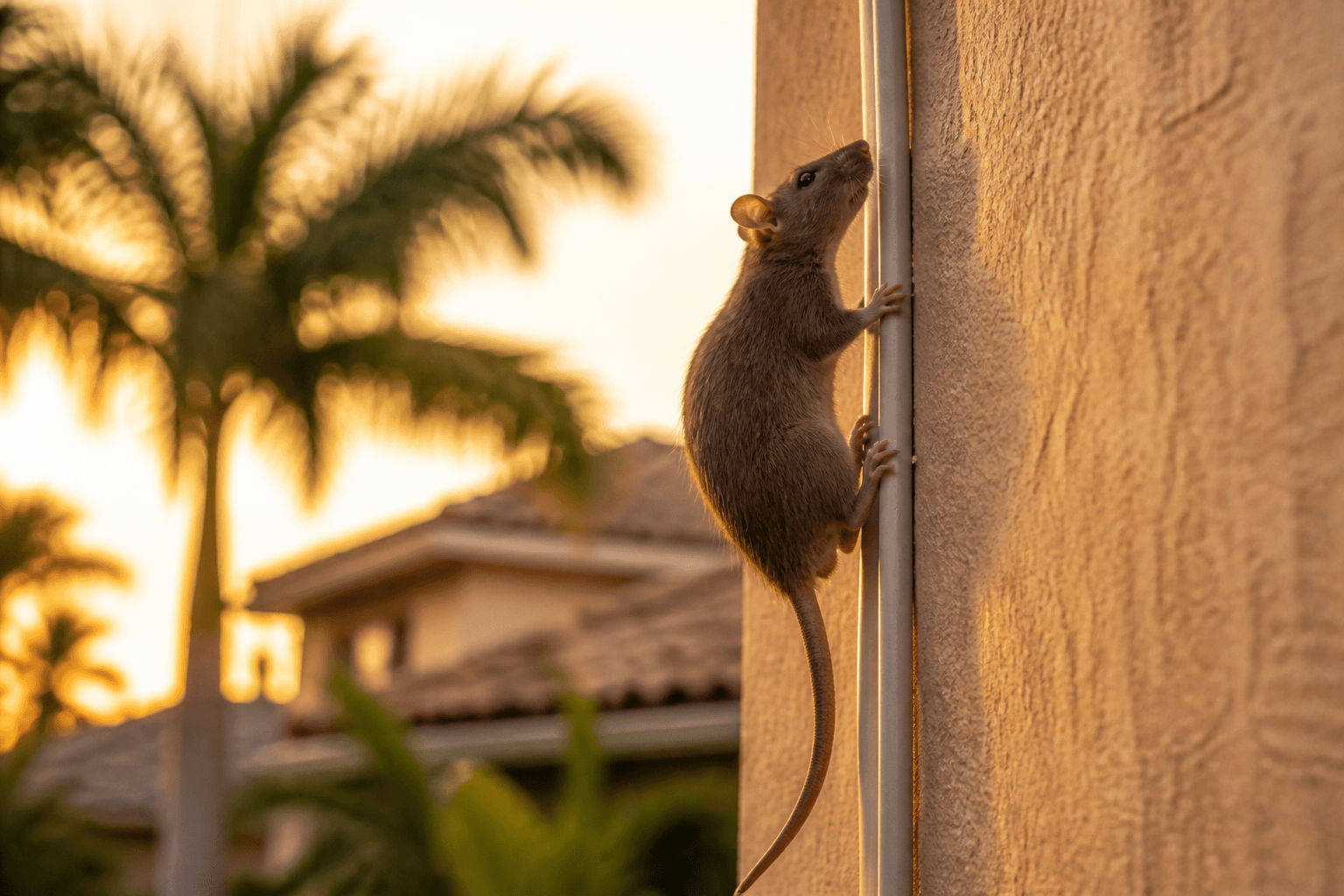
Roof rats are sleek, agile climbers — smaller and darker than the ground-dwelling Norway rat, with a tail longer than their body. As the name suggests, they prefer to live up high: attics, soffits, rafters, and the palm trees and oaks that overhang so many Orlando roofs. If something is scurrying above you at night rather than in the walls or crawlspace, it's almost certainly a roof rat.
Not sure which rodent you're dealing with? Compare them in our guide to the key differences between roof rats and Norway rats.
Signs you have roof rats
| Sign | What to look for |
|---|---|
| Noises | Scratching, gnawing, or scurrying in the ceiling or attic, usually just after dark |
| Droppings | Dark, spindle-shaped pellets (½ inch) in the attic, along beams, or in the garage |
| Grease marks | Dark smudges where their oily fur rubs along rafters and entry points |
| Gnaw damage | Chewed wiring, PVC, cardboard, or stored items in the attic |
| Runways | Trails through insulation and along the tops of walls or fences |
| Sightings | Rats running along power lines, fences, or tree branches at dusk |
Chewed wiring is more than a nuisance — it's a genuine fire risk, which is why roof rats should never be ignored.
How to get rid of roof rats
1. Inspect and find the entry points
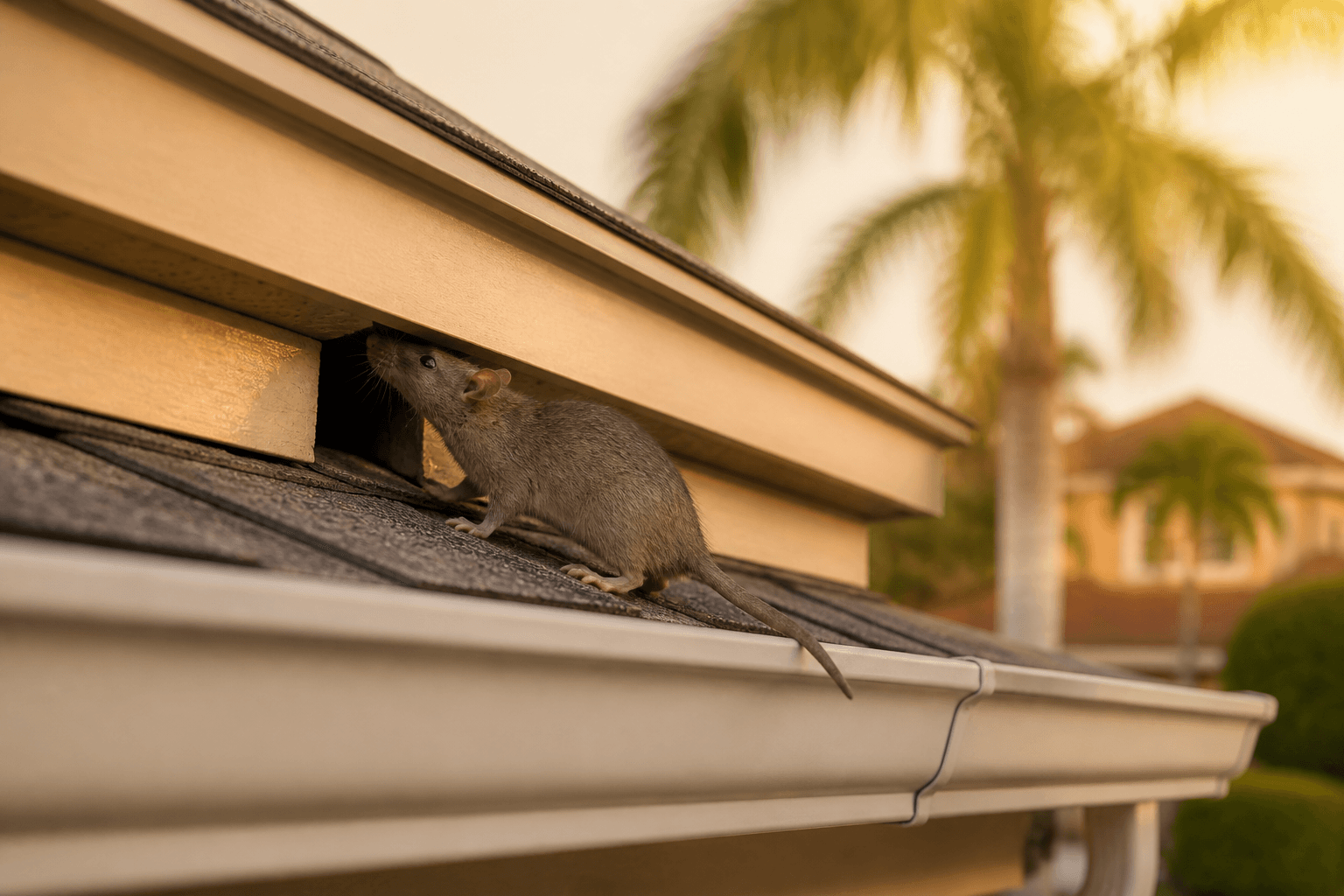
Rats can squeeze through a gap the size of a quarter. Walk your roofline and check soffit gaps, roof-vent screens, plumbing stacks, gable vents, and where the fascia meets the tile. Note every gap — you'll seal these later.
2. Trap the rats already inside
Snap traps remain the most effective and humane tool. Place them perpendicular to walls and runways in the attic, baited with peanut butter or dried fruit. Skip poison baits indoors: a poisoned rat often dies inside a wall or attic, and the odor and secondary-poisoning risk to pets aren't worth it.
3. Seal every entry point (this is the step that matters)
Once activity drops, close the gaps with rodent-proof materials — galvanized hardware cloth, sheet metal, and copper mesh. Rats chew straight through foam and steel wool, so those are only temporary. This "exclusion" work is what actually keeps rats out for good.
4. Cut off food and cover
- Trim tree limbs back at least 3–4 feet from the roof — roof rats use them as highways.
- Pick up fallen citrus and other fruit (a favorite in Florida yards).
- Secure trash, pet food, and bird seed in sealed containers.
How to keep roof rats out for good
Trapping without sealing is a temporary fix. A permanent solution combines exclusion (closing entry points), habitat reduction (trimming and sanitation), and monitoring so a single stray rat doesn't turn back into an infestation. For a whole-home approach, see our rodent control services in Orlando.
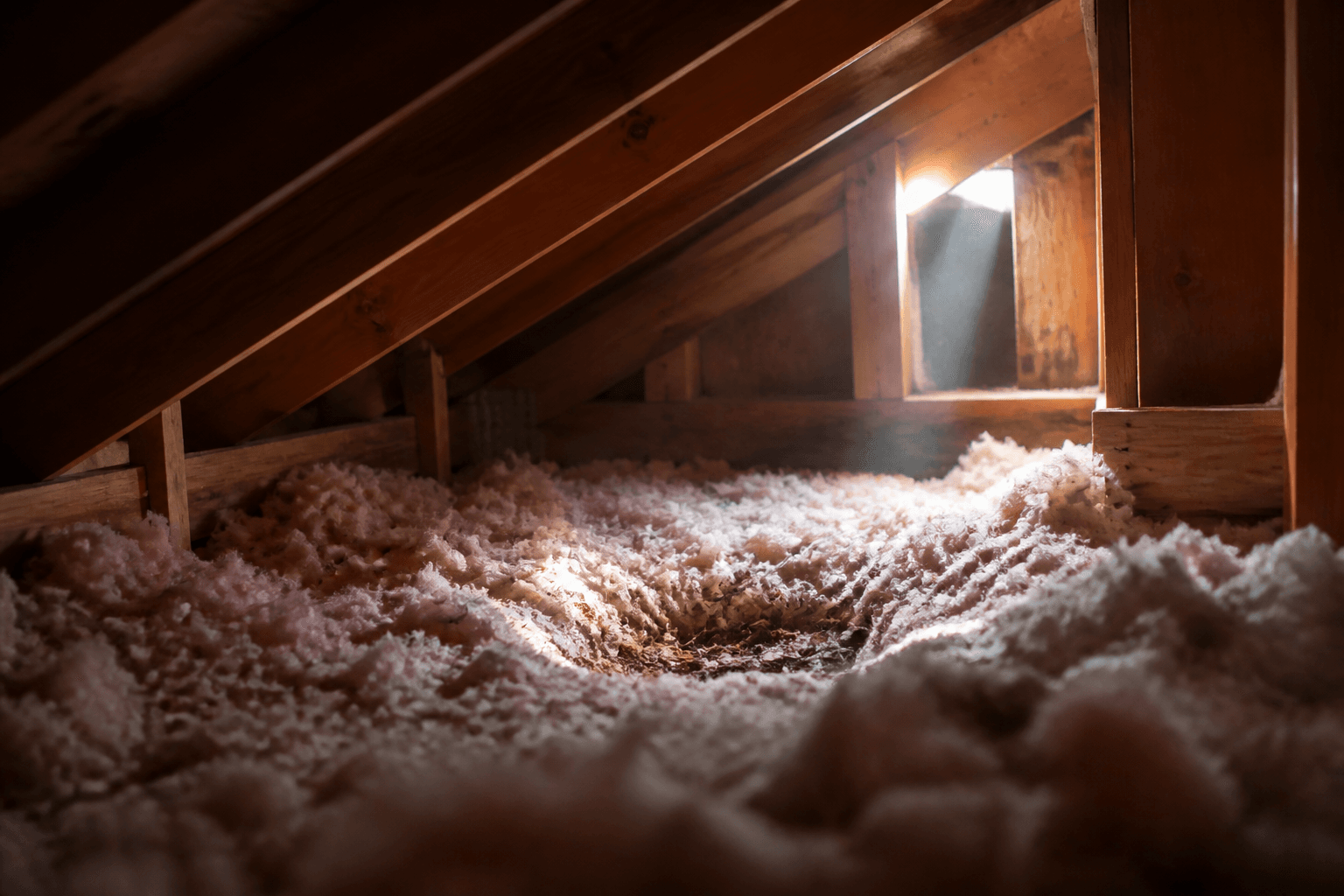
If rats have already gotten into your attic insulation, our companion guide covers how to get rid of rodents in attic spaces for good, including cleanup and decontamination.
When to call a professional
Call a pro if you hear activity for more than a week, find droppings across multiple areas, see gnawed wiring, or simply can't locate the entry points. Roof rats breed year-round in Florida, so a small problem becomes a big one fast. A licensed technician will inspect the full roofline, trap strategically, seal with the right materials, and warranty the exclusion work.
Frequently Asked Questions
How long does it take to get rid of roof rats?
With aggressive trapping and proper sealing, most Orlando homes are cleared within 1–3 weeks. Heavier infestations or hard-to-reach entry points can take longer.
Do roof rats leave on their own?
No. Your attic offers safe, climate-controlled shelter and easy access to food and water. They won't leave voluntarily — and they reproduce quickly, so the population only grows until you intervene.
Are roof rats dangerous?
Yes. They can contaminate food and surfaces, spread diseases through their droppings and urine, carry parasites like fleas and mites, and chew wiring that creates a fire hazard.
What smell keeps roof rats away?
Peppermint oil, ammonia, and other scents are sometimes suggested, but they're unreliable and short-lived at best. Sealing entry points is the only method proven to keep roof rats out.
Hearing something in your ceiling? Panther Pest Control has helped hundreds of Central Florida homeowners evict roof rats and seal them out for good. Get a free quote or call us today.