RodentsAugust 18, 20266 min read
Roof Rat vs Norway Rat: Key Differences Homeowners Should Know
Roof rat or Norway rat? Learn the differences in size, tail, ears, and nesting so you can identify the rat in your Orlando home and treat it right.

The quickest way to tell them apart: roof rats are smaller, darker climbers with a tail longer than their body and large ears — they nest up high. Norway rats are bigger, heavier, and brown, with small ears and a tail shorter than their body — they burrow down low. Correct ID matters because it tells you where to trap and seal.
Both species live in Central Florida, but they behave very differently. Getting the identification right is the first step to getting rid of them.
Roof rat vs Norway rat at a glance
| Feature | Roof Rat | Norway Rat |
|---|---|---|
| Size | 6–8 in body; 5–9 oz | 7–10 in body; 10–17 oz |
| Build | Slender, agile | Stocky, heavy |
| Color | Dark gray to black | Brown to grayish, lighter belly |
| Tail | Longer than body | Shorter than body |
| Ears | Large, prominent | Small, close to head |
| Nose | Pointed | Blunt |
| Nests | High — attics, rafters, trees | Low — burrows, crawlspaces, foundations |
| Common in FL? | Very common | Less common, but present |
Roof rats: the climbers
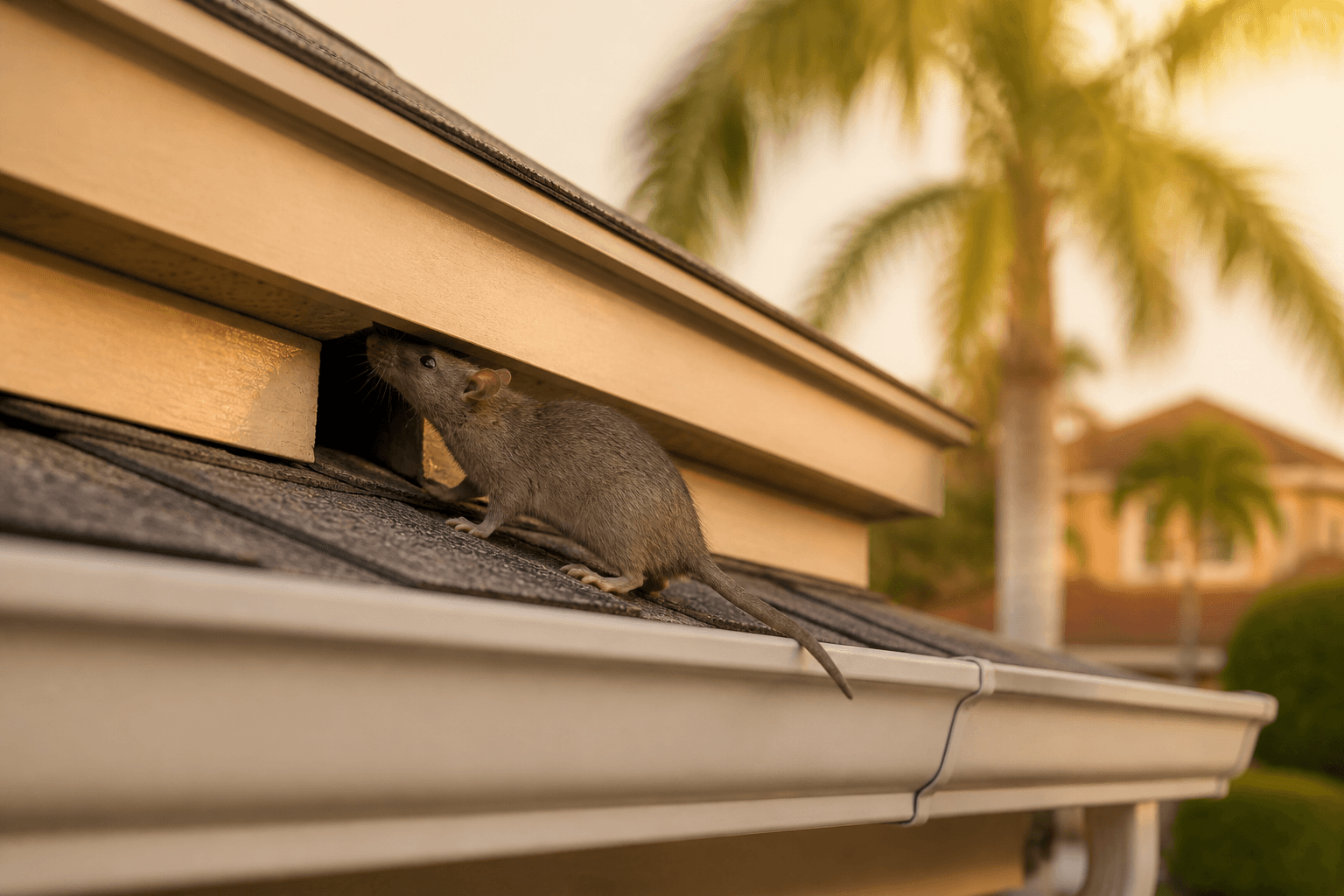
Roof rats (Rattus rattus) are by far the more common rat in Orlando homes. True to their name, they live up high — attics, soffits, rafters, and the tree canopy overhanging your roof. They're excellent climbers and often enter along power lines, fences, and branches that touch the house.
If you hear activity overhead at night, you're almost certainly dealing with roof rats. Our guide to getting rid of roof rats walks through trapping and sealing the roofline.
Norway rats: the burrowers
Norway rats (Rattus norvegicus) are larger and prefer to stay low. They burrow along foundations, under slabs and sheds, and in crawlspaces, and they travel through sewers and drains. In a home you'll find them in the lower levels — the garage, ground floor, or basement-style spaces — rather than the attic.
Why correct identification matters
Because the two species live at different heights, they call for different treatment strategies:
- Roof rats → focus trapping and exclusion on the roofline and attic: soffit gaps, vents, and overhanging branches.
- Norway rats → focus on ground level: foundation gaps, burrows, door sweeps, and crawlspace vents.
Seal the wrong level and you'll keep catching rats without ever solving the problem. If you're unsure which you have — or you have both — a professional inspection removes the guesswork. See our rodent control services in Orlando.
Once you've identified the rat, our guide to getting rid of rodents in attic spaces covers removal, sealing, and cleanup.
Frequently Asked Questions
Which rat is most common in Orlando?
Roof rats are the most common rat in Central Florida homes, thanks to our warm climate, dense tree canopy, and attic-friendly rooflines. Norway rats are present but less frequently found indoors here.
How can I quickly tell a roof rat from a Norway rat?
Check the tail and ears. A roof rat's tail is longer than its body and its ears are large; a Norway rat's tail is shorter than its body and its ears are small. Roof rats are also slimmer and darker.
Can I have both roof rats and Norway rats?
Yes. It's possible to have roof rats in the attic and Norway rats at ground level at the same time, which is why a full-home inspection is the safest approach.
Is one more dangerous than the other?
Both spread disease, contaminate food, and gnaw wiring. Neither should be tolerated indoors — the health and fire risks are similar regardless of species.
Not sure what's in your home? Panther Pest Control will identify the species, find the entry points, and seal them for good. Get a free quote or give us a call.