RodentsAugust 3, 20266 min read
How to Make a Homemade Rodent Trap (and When to Call a Pro)
Step-by-step DIY rodent traps you can make at home, including the bucket trap — plus how to bait and place them, and when homemade traps aren't enough.
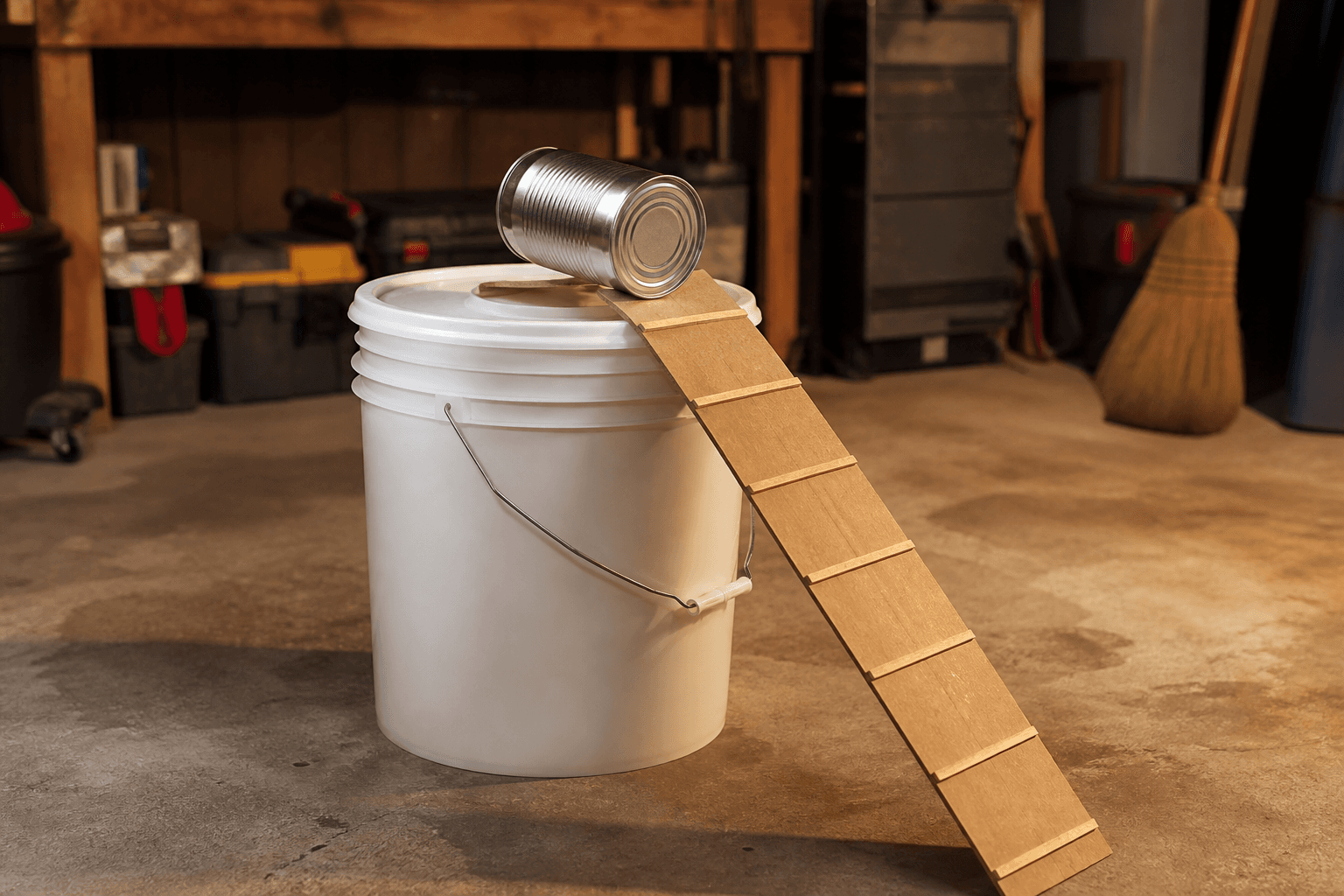
The most effective homemade rodent trap is the bucket trap: a 5-gallon bucket with a rolling can or spinning-lid on top and a ramp leading up to it. The rodent climbs the ramp for the bait, the surface gives way, and it drops into the bucket. It's cheap, reusable, and can catch multiple rodents in a night.
Homemade traps are useful for a light problem. Here's how to build a few — and how to know when it's time to call a professional.
Homemade rodent trap options
| Trap | How it works | Best for |
|---|---|---|
| Bucket + rolling can | Rodent walks a ramp, steps on a spinning can, falls in | Multiple rats or mice |
| Bucket + spinning lid | A pivoting flap/lid tips the rodent into the bucket | Mice, small rats |
| Bottle/tube snap | A baited bottle pivots off a ledge into a bin | Mice |
| Glue board (store-bought) | Sticky surface holds the rodent | Not recommended — inhumane, unreliable |
How to build a bucket rodent trap
- Get a 5-gallon bucket. No lid needed.
- Make the roller. Push a thin rod (or stiff wire/dowel) through an empty soda can, then rest the rod across the bucket's rim so the can spins freely. (A pivoting plastic lid works too.)
- Smear bait — peanut butter — on the middle of the can.
- Add a ramp — a scrap board or ruler from the floor/counter to the rim so rodents can climb up.
- Choose wet or dry. Add a few inches of water for a lethal trap, or leave it dry for a catch-and-release trap (release far from home, where legal).
When the rodent steps onto the can to reach the bait, the can spins and drops it in.
Baiting and placement (this matters more than the trap)
Even the best trap fails if it's placed wrong:
- Bait with peanut butter or a small amount of dried fruit — not cheese.
- Place along walls and runways, where rodents actually travel. They avoid open floors.
- Set traps near droppings, gnaw marks, and grease trails.
- Use several traps, close together — rodents are cautious and populations are usually larger than they appear.
- Check daily; reset and re-bait as needed.
For more on placement and technique, see how to catch a rat in Florida homes.
When homemade traps aren't enough
DIY traps reduce numbers, but they don't solve the real problem: how rodents are getting in. Without sealing entry points, new rodents keep arriving. Call a professional when:
- You catch rodents but the activity never stops.
- You hear them in the walls or attic.
- You find droppings in multiple areas or chewed wiring.
A pro combines trapping with chew-proof exclusion and monitoring — the part DIY can't easily do. See our rodent control services in Orlando.
Frequently Asked Questions
What is the best bait for a homemade rodent trap?
Peanut butter is the most effective bait for both rats and mice. A small dab works better than a large glob, and it's harder for the rodent to steal without triggering the trap.
Does the bucket trap really work?
Yes — it's one of the most effective DIY methods and can catch several rodents in a single night, which snap traps can't. Placement along walls and runways is key.
Are homemade traps humane?
A dry bucket trap allows catch-and-release; a water trap is lethal but quick. Avoid glue boards, which are widely considered inhumane and unreliable.
Will traps alone get rid of my rodent problem?
Not permanently. Traps remove the rodents present, but you must seal entry points to stop new ones. That's why lasting control pairs trapping with exclusion.
Traps not solving it? Panther Pest Control removes the rodents and seals the entry points so they don't return. Get a free quote today.