CockroachesJuly 4, 20267 min read
German Cockroaches in Florida: Why They're So Hard to Eliminate
German cockroaches breed fast and hide in kitchens and baths. Learn why they're so hard to eliminate — and the baiting strategy that actually works.
German cockroaches are hard to eliminate because they breed extremely fast, hide in tiny cracks near food and water, and have grown resistant to many sprays. A single female can lead to thousands of offspring in a year. The only reliable fix is a thorough gel-baiting program paired with sanitation — not sprays or foggers.
If you keep seeing small roaches in your kitchen despite spraying, you're likely dealing with German cockroaches. Here's why they persist and what actually works.
How to identify German cockroaches
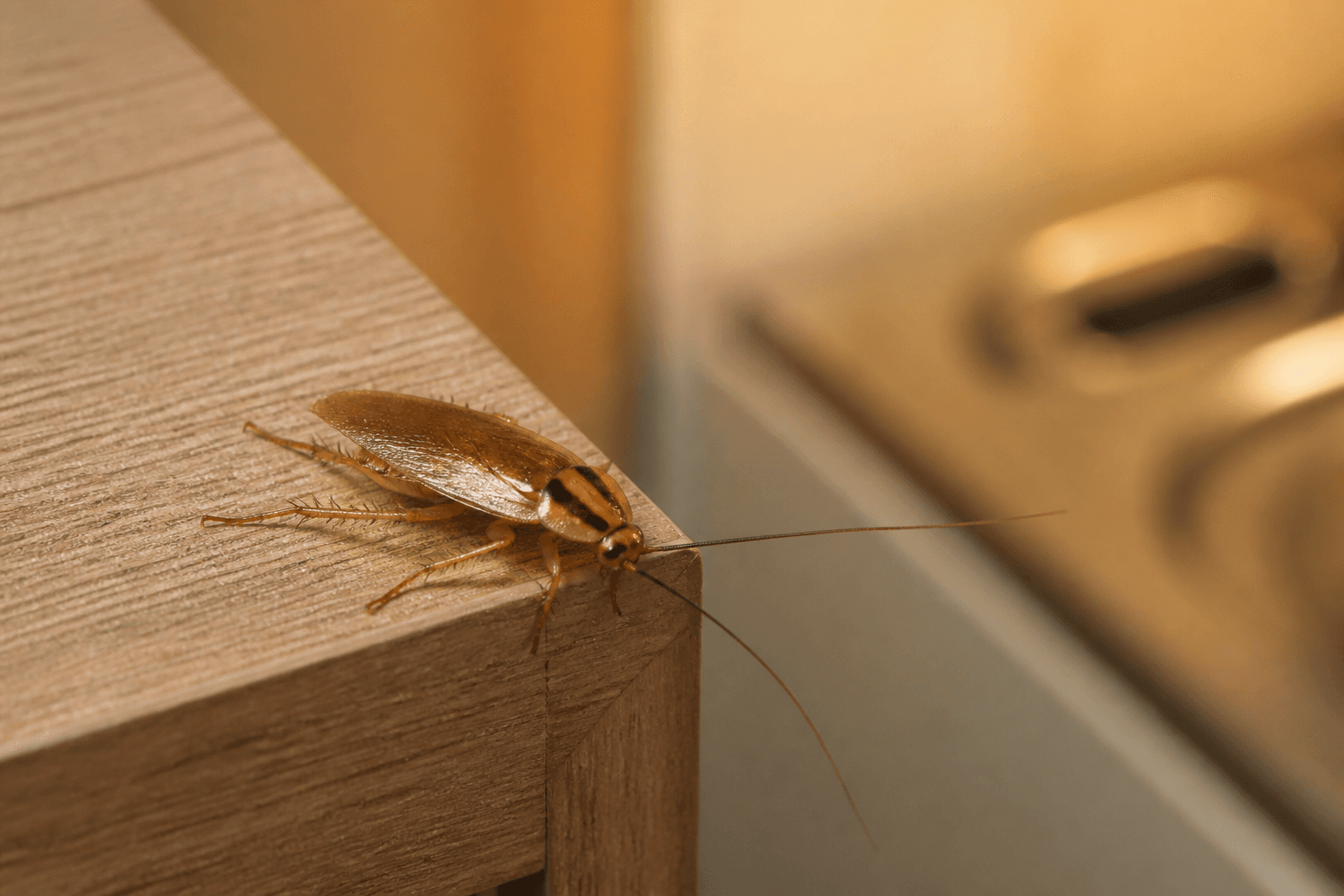
- Small — about ½ inch, light brown to tan.
- Two dark parallel stripes running behind the head.
- Indoors year-round, concentrated in kitchens and bathrooms.
- Prefer warm, humid, tight cracks — behind appliances, under sinks, in cabinet seams, and around electronics.
Not sure it's a German roach? Compare species in our how to get rid of cockroaches guide.
Why German cockroaches are so hard to eliminate
| Factor | Why it matters |
|---|---|
| Rapid breeding | One egg case (ootheca) holds ~30–40 eggs; a female produces several |
| Fast life cycle | Egg to adult in a couple of months — populations explode |
| Tiny harborages | Hide in cracks too small to reach with sprays |
| Spray resistance | Many populations resist common contact insecticides |
| Spray aversion | They avoid treated surfaces, scattering deeper into walls |
The life cycle problem
A female carries an egg case containing roughly 30–40 eggs and can produce several in her lifetime. With a rapid egg-to-adult cycle, an infestation can grow from a few roaches to thousands within a year — which is why partial treatments never keep up.
What actually works
1. Gel bait — done thoroughly
Place many small dabs of gel bait directly into cracks and crevices where roaches harbor: cabinet corners, hinges, behind and under appliances, and around plumbing. Roaches feed and spread the active ingredient through the population. Rotate bait types periodically to counter resistance.
2. Insect growth regulators (IGRs)
IGRs prevent nymphs from maturing and reproducing, breaking the breeding cycle that makes German roaches so persistent. Used with bait, they're highly effective.
3. Rigorous sanitation
Remove the food and water that sustain them:
- Wipe up crumbs and grease nightly; never leave dirty dishes out.
- Store food and pet food in sealed containers.
- Fix leaks and dry sinks — roaches can't last long without water.
- Declutter cardboard and paper that create harborage.
4. Skip sprays and foggers
Contact sprays and "bug bombs" scatter German roaches deeper into voids and can make things worse. Targeted baiting reaches the harborage; foggers don't.
When to call a professional
German cockroach infestations are notoriously difficult for DIY to fully clear. If you're still seeing them after baiting, or they're spreading between rooms, a professional can deploy targeted baiting, IGRs, and follow-up monitoring. Our residential pest control in Orlando is built to eliminate stubborn roach populations and keep them out.
Frequently Asked Questions
Why can't I get rid of German cockroaches?
They breed extremely fast, hide in cracks too small for sprays to reach, and many populations resist common insecticides. Only thorough gel-baiting combined with sanitation reliably eliminates them.
What does German cockroach poop look like?
It appears as tiny black or brown specks resembling ground pepper or coffee grounds, often smeared in cabinet corners, drawer tracks, and along walls near harborage areas.
Do German cockroaches ever go away on their own?
No. With their rapid breeding and indoor lifestyle, an untreated infestation only grows. Active baiting and sanitation are required to eliminate them.
Are German cockroaches a health risk?
Yes. They can contaminate food and surfaces and are a well-documented trigger for asthma and allergies, particularly in children.
Battling German roaches? Panther Pest Control uses professional baiting and IGRs to eliminate them for good. Get a free quote or call today.